
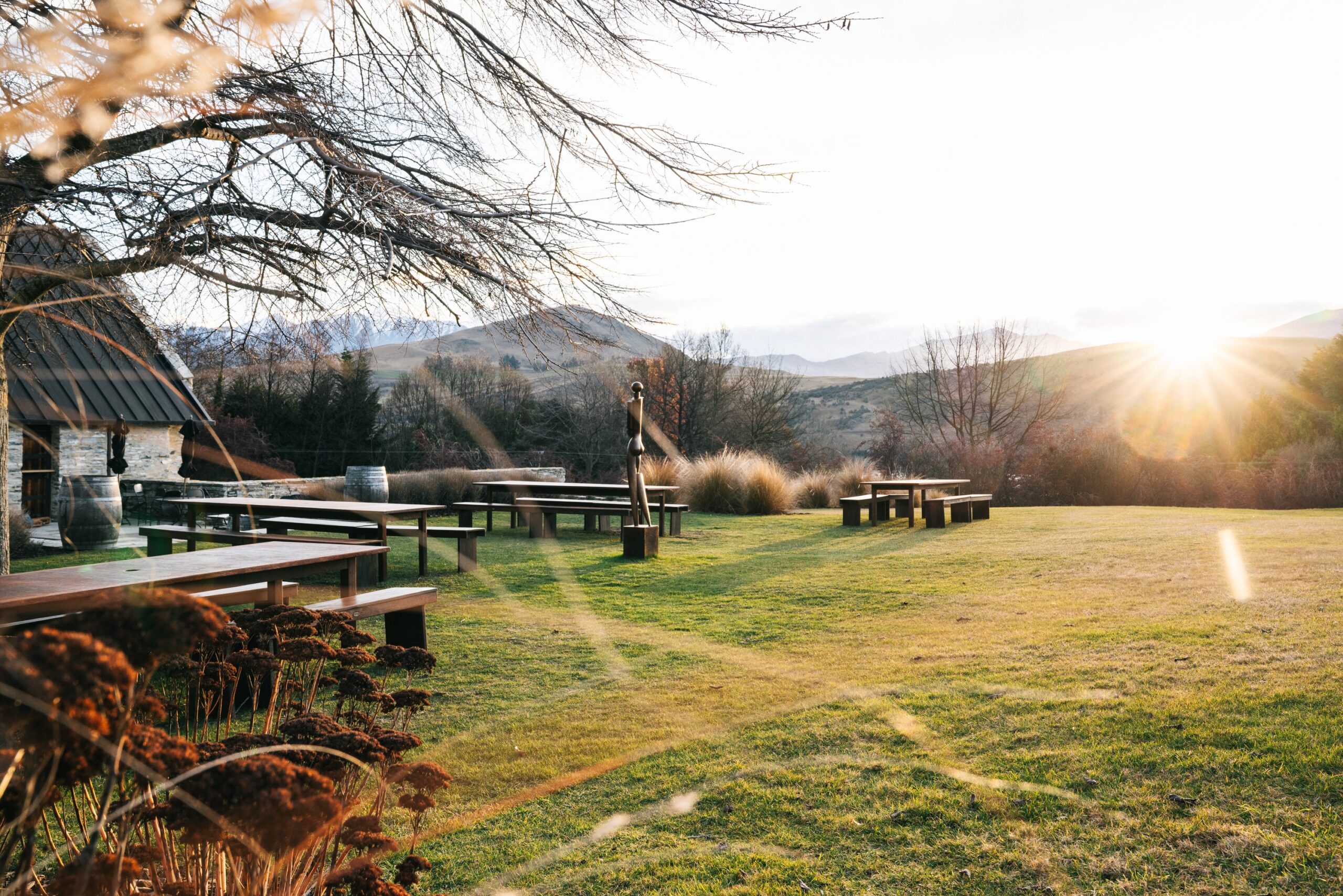
Winter settles over Central Otago like a held breath. The Remarkables wear their snow, Lake Hayes turns to steel, it is the season of broths and braises, of things that simmer slowly, and it is exactly the right season for what is happening inside the restaurant at 10 Arrowtown-Lake Hayes Road.
The Michelin-Starred Amisfield, temple of wild New Zealand gastronomy that was built into one of the country’s defining dining destinations, has turned a page. There is a new executive chef at the pass, his name is Sun Peng, and his first menu is less a change of direction than a change of voice: softer in volume, sharper in focus, and unmistakably his own.
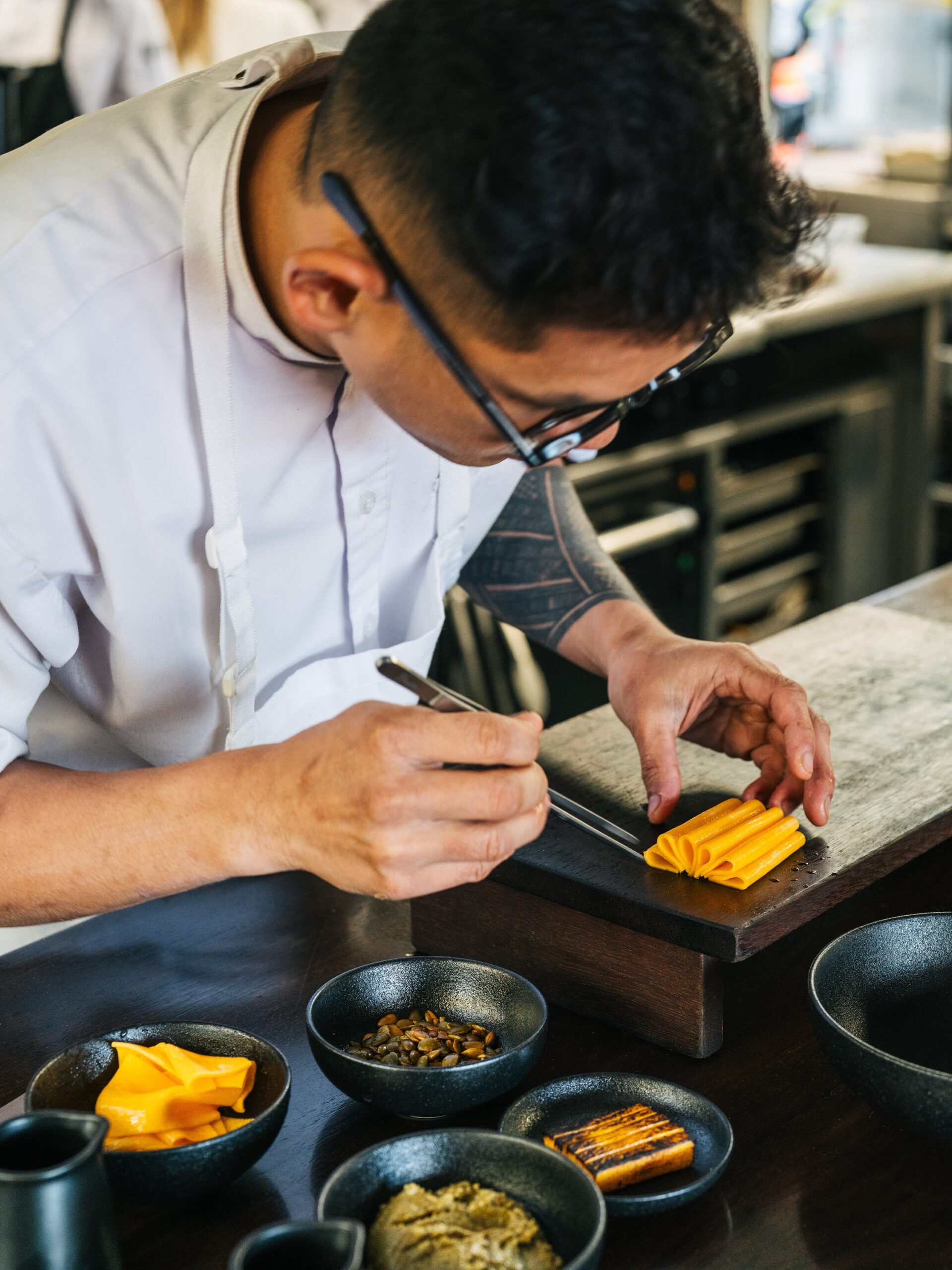
He is not, it should be said, a stranger arriving with a suitcase of ideas. Sun Peng spent four years as Amisfield’s head chef, learning this landscape season by season and quietly refining his vision inside someone else’s, before stepping into the executive role. What arrives on the plate now is not a debut so much as a long-held conviction finally allowed to speak in the first person.
“The menu is very much me,” he says. “My background, my training, the place where I live, the things that I like.” Coming from many chefs, that would be boilerplate. Coming from Sun Peng, it is a literal description of what reaches the table.
A Culinary Vision Carried Across the Ocean
Sun Peng is Malaysian, from a town where, as he puts it, “every area has their own version of laksa, and my town is very curry.” His culinary life has traced an arc across Asia and the Pacific, through Taiwan, Thailand, Singapore and finally New Zealand, with a first job in a French bistro that left its fingerprints on his technique. The result is a cook who carries two pantries in his head at once: the butter, the emulsions and the precision of the European kitchen, and the galangal, tamarind, curry leaf and lemongrass of the Southeast Asian one.
What makes this new chapter so appealing is that he refuses to choose between them, and he refuses, equally, to force them together. Bluff seafood, wild red deer, p?ua from the cold southern waters, kawakawa from the bush: the produce remains defiantly local. The aromatics, the techniques, the way a meal is meant to unfold at the table, those remember where the chef comes from. None of it translates into heat for its own sake; these are perfumes and accents, not fire.
And there is a lot of biography in those accents. The soups are his mother’s habit (“I grew up drinking soup. My mom always made soup”). The spring roll is the one he orders first at family dim sum. The laksa is his hometown in a bowl. In his first menu as executive chef, Sun Peng has done the brave thing: instead of proving he can cook like everyone else, he is showing us who he is.
Essentialism, After the Baroque
The other decision defining this era is restraint. Amisfield’s previous incarnation was gloriously maximalist, a multi-hour epic of spectacle and wilderness. Sun Peng holds on to the generosity, a substantial parade of dishes still crosses the table, but compresses the evening into roughly two and a half hours, served in phases so the meal breathes rather than marches. The plating philosophy has been distilled to five words he delivers without ceremony: “Nothing crazy. Neat, tidy, precise.”
But this is not a correction, it is Sun Peng’s temperament. Where the previous chapter was baroque, this one is essentialist. Dishes have been stripped back to their main actor; the supporting cast exists to make the protagonist taste more like itself. Nothing on the plate is decorative. In an era when tasting menus often mistake length for depth, there is something almost radical about a kitchen this ambitious choosing the discipline of less: fewer hours, fewer flourishes, more flavor per square inch of porcelain.
New Zealand Seasoned from Memory
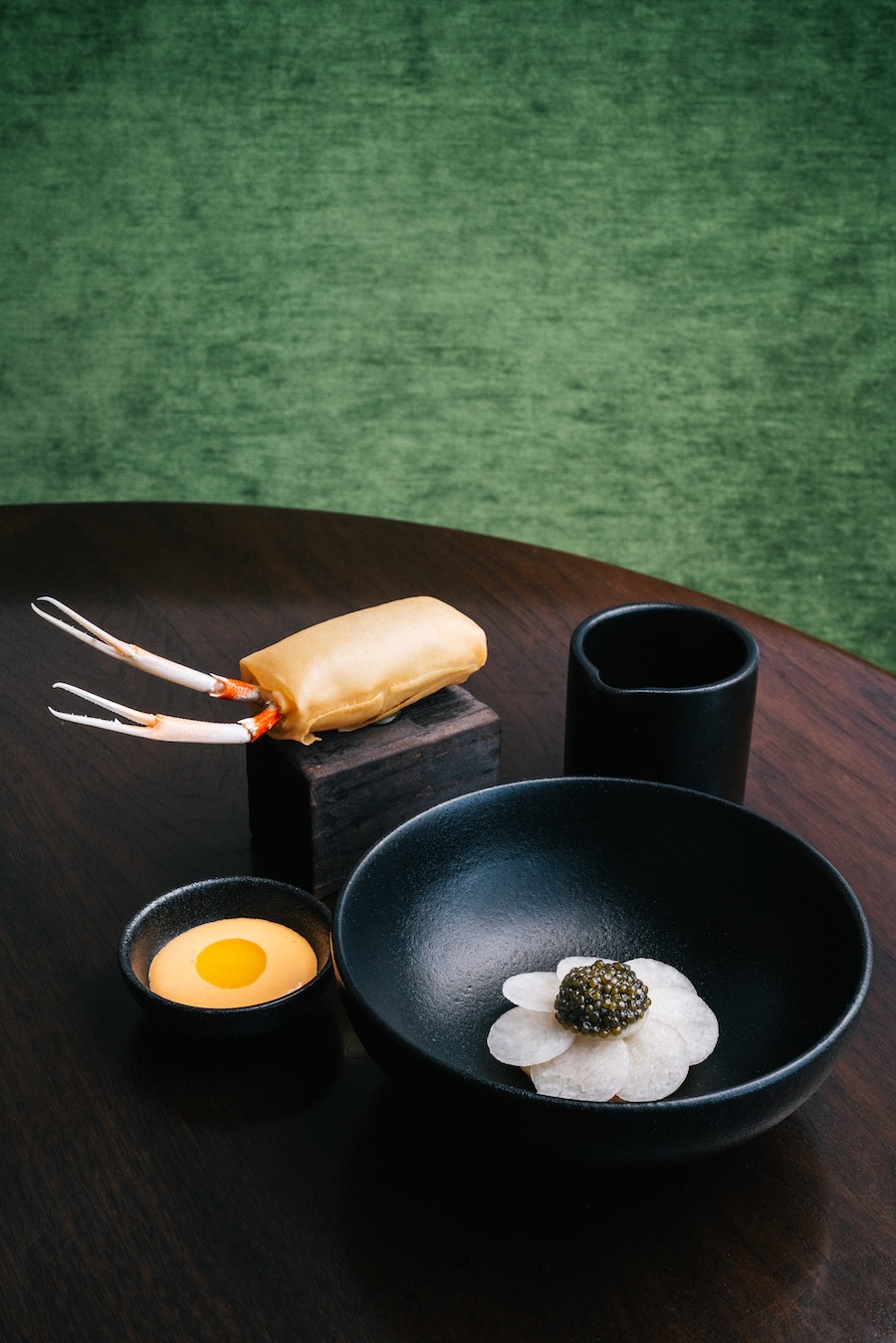
One dish functions as a thesis statement, and it is pure autobiography in three parts. First, langoustine tartare, a technique Sun Peng freely admits he never touched in Malaysia (“I learned tartare being a chef”), dressed the way his memory insists: ginger, shallots, ponzu, a little daikon, crystal caviar. Europe’s raw-bar elegance, seasoned in Asian.
Second, the popiah: a langoustine spring roll folded with a Chinese pastry technique so it puffs and shatters, an homage to the prawn spring roll he has ordered at dim sum his whole life, served with a langoustine emulsion brightened with yuzu. The emulsion itself tells the kitchen’s zero-waste story, built on an oil drawn from the roasted shells.
Third, the tang, Southeast Asia’s word for the broth that ends up on every family table. The langoustine heads and shells are coaxed into a soup perfumed with galangal and lemongrass, winter-appropriate and deeply personal. One crustacean, used entirely, becomes a self-portrait: French training, Chinese table, Malaysian soul.

A Double Culinary Accent
The same double accent runs through everything. Seasonal pumpkin has appeared layered as a praline of its seeds, a roasted heart, and pickled ribbons with red chili, dressed in a spice blend that flirts with curry without a gram of curry powder, the sauce nothing more than the pumpkin’s own juices reduced and split with pumpkin seed oil. One vegetable, complete.
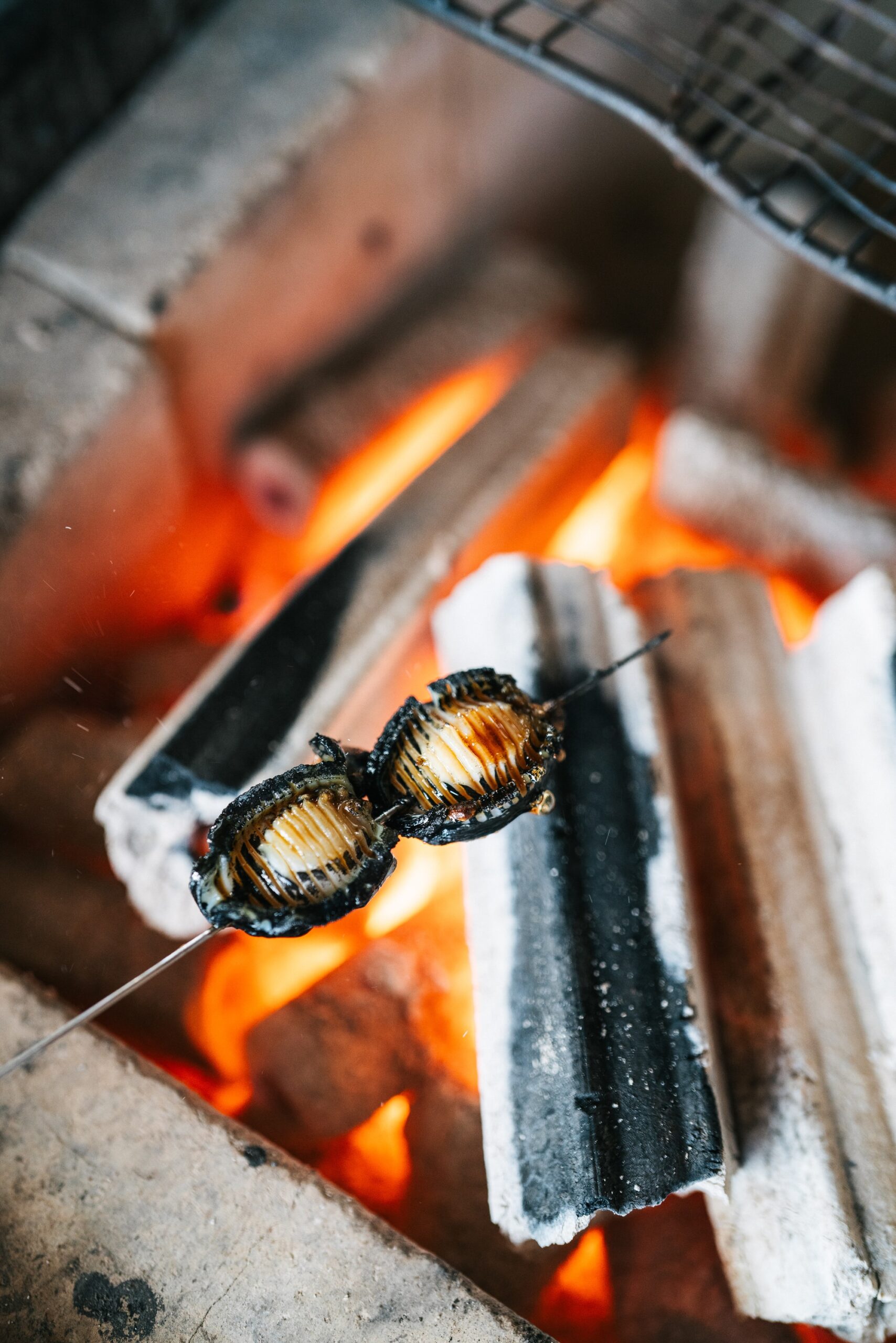
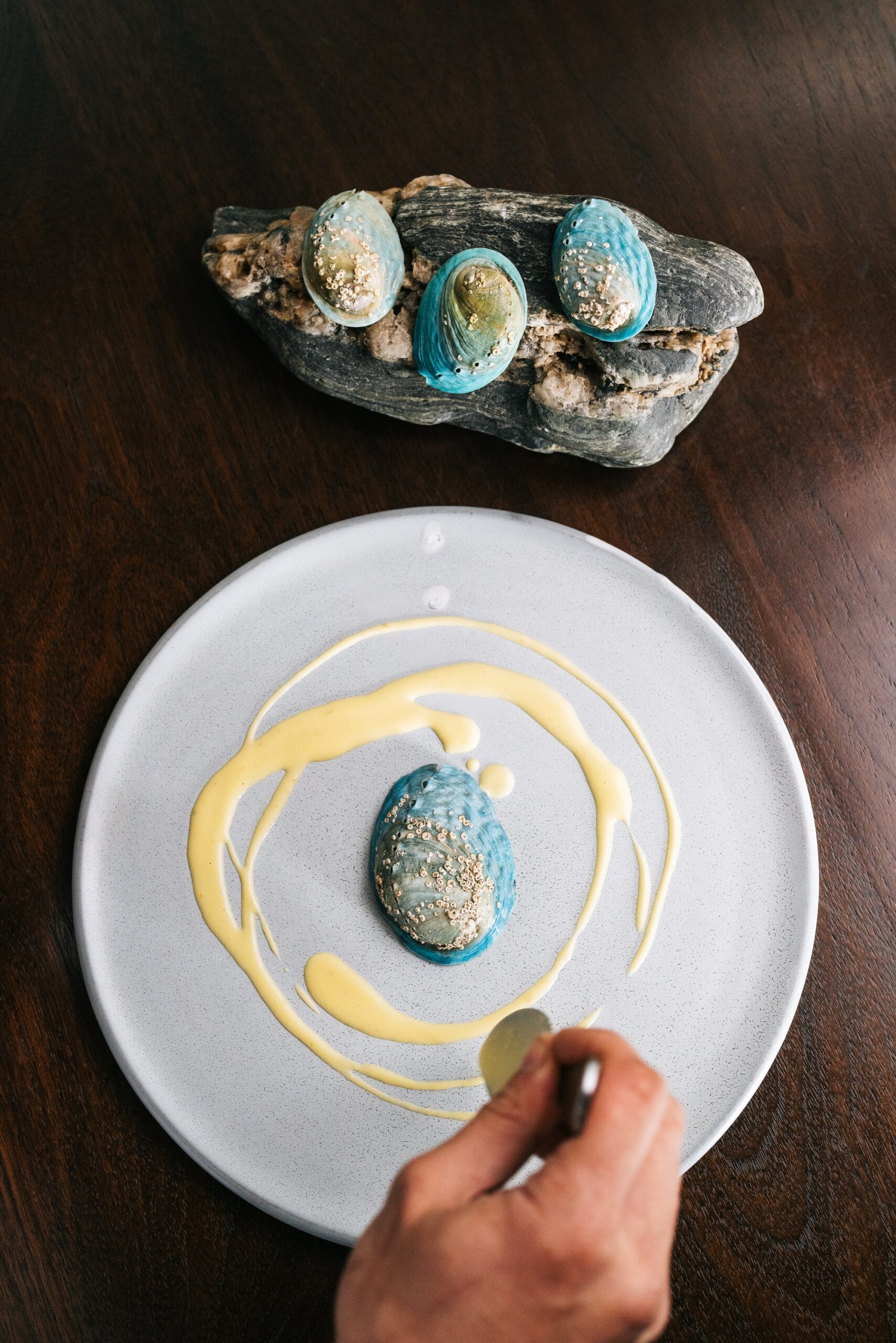
The paua, that jade-fleshed taonga of the southern coast, comes into its own in the depths of winter, palm-sized and sourced live. Sun Peng sears and grills it with a tare in the yakitori tradition, soy, sake and mirin, but enriched with the p?ua’s own liver, which takes on the glaze over the fire and delivers what he calls a kind of sea foie gras. It rests on an XO of tawaka, a mushroom native to New Zealand, and a beurre blanc spiked with fermented green chili and the tingling numbness of green Sichuan peppercorn. It is served in the shell, to be eaten with chopsticks and a spoon, and it may be the single best argument for this new marriage of island and continent.
Then there is a dish Sun Peng only reluctantly calls laksa. Blue cod from Bluff is wrapped in a mousseline of crayfish, roasted and steamed, set over clams and mussels marinated in rempah, the aromatic paste at the base of half of Malaysia’s cooking, in a broth built from crayfish shells and a fruity, tamarind-deep Nyonya paste, finished with curry leaf oil. Alongside it come two companions from the hawker stalls of his memory: a crayfish skewer lacquered in tamarind and shrimp paste, and a winter-roots salad sharpened with magnolia vinegar, his nod to rojak, the sweet-sour-spicy fruit salad that always seems to be sold three steps from the laksa pot. You move between fish, skewer and salad the way you would graze a hawker center, richness and relief in rotation. It is the most Malaysian moment on the table, and it is built entirely from the bottom of the South Island.
The Deer and the Wok Stall
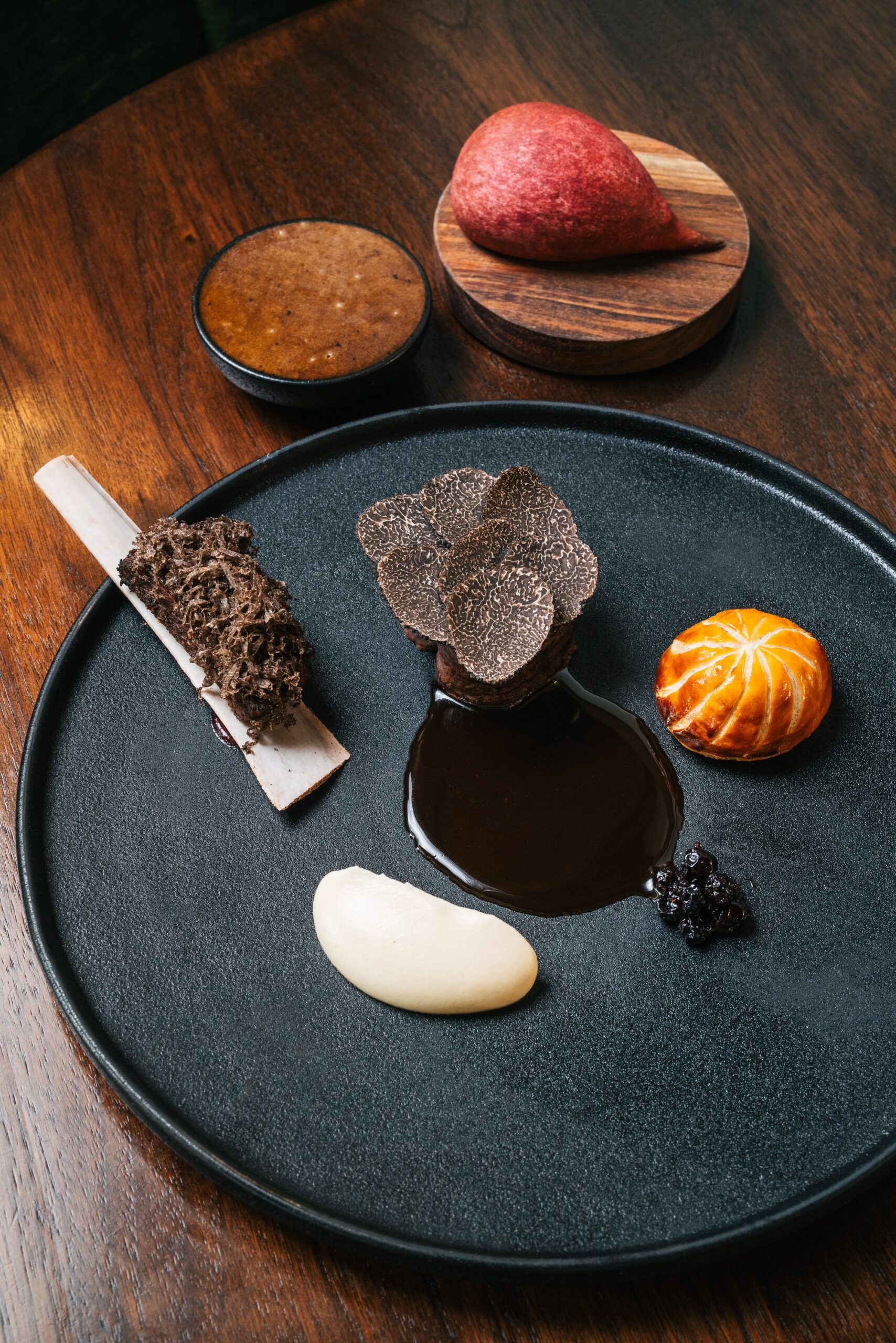
Amisfield’s great protagonist, wild red deer, remains, and has been introduced to a new vocabulary. It has arrived in three parts: ribs marinated in panggang spices, the satay-adjacent blend of the Malay grill, slow-cooked, barbecued and crowned with New Zealand black truffle; the tenderloin, cooked gently over charcoal and brushed with butter, salt and pepper, because, in his words, the wild meat is amazing and needs nothing more; and a small pithivier of venison blood pudding, blood and rice and pork fat and coffee-sweetened onion, closer to a Spanish morcilla than to anything Escoffier codified. Pickled blackcurrants, preserved from the previous season, cut the richness.
Then comes the sauce, and with it the most disarming confession of the meal. The venison jus is seasoned with kam heong, the “golden fragrance” paste of chili, garlic, lemongrass, ginger, oyster sauce and curry leaf that powers a thousand Malaysian stir-fry stalls, the sort of place where a hundred dishes are wokked to order under fluorescent light. A French jus, whispering hawker. It is there as a hint, not a shout, and that proportion is the whole point of this kitchen.
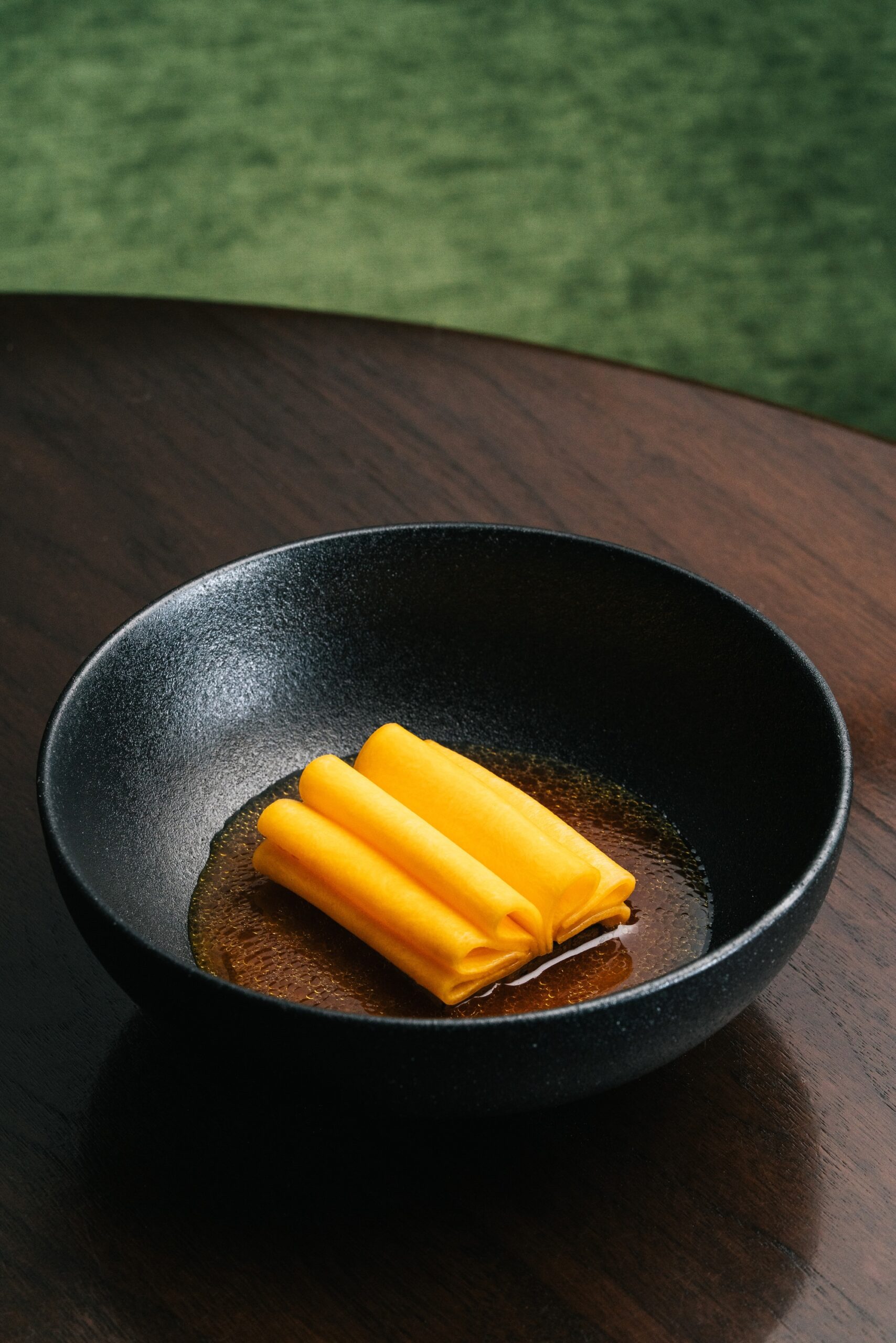
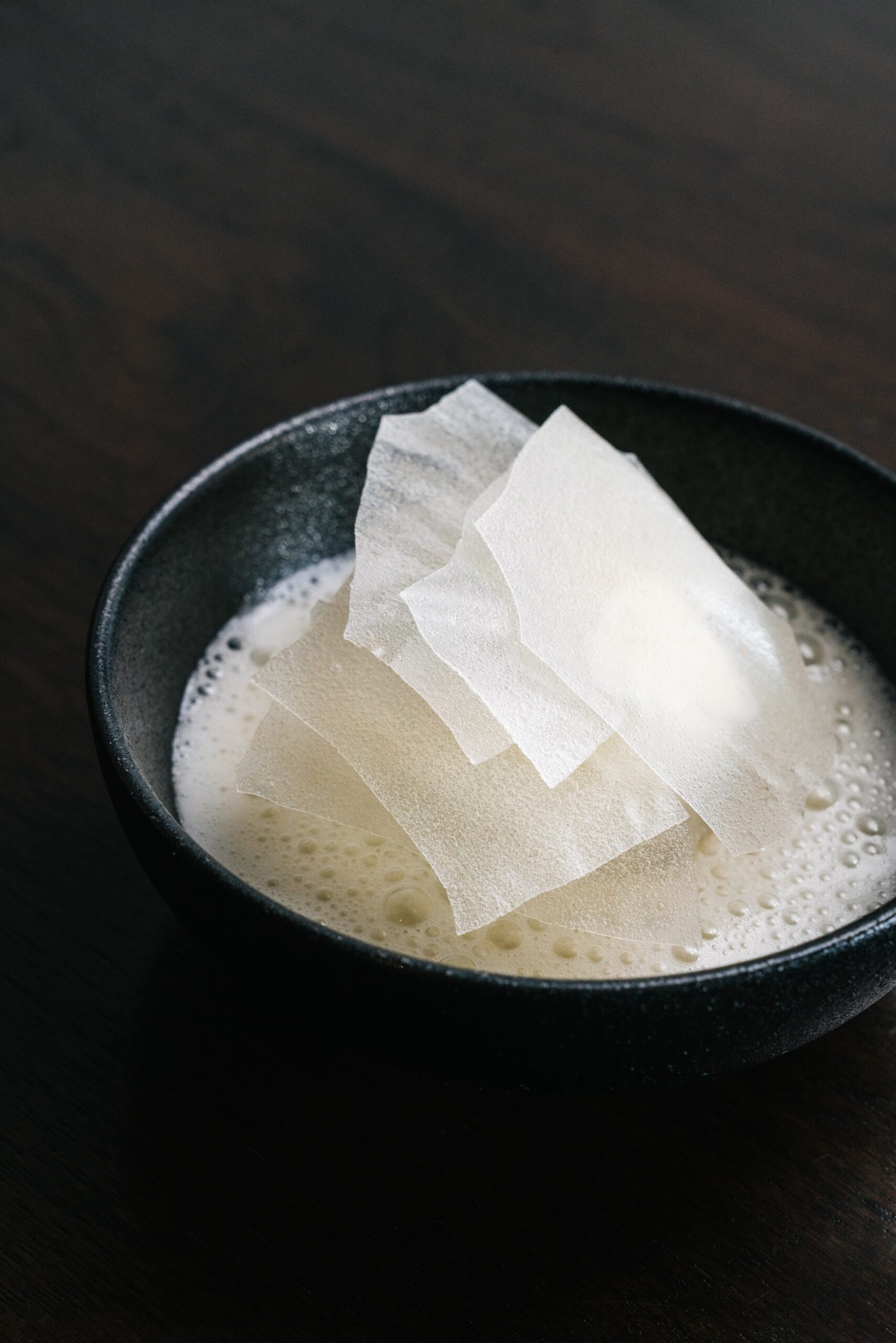
Even the sweet courses carry a passport. One recent dessert was winter itself on a plate, entirely white: an ice cream of sake kasu, the lees from Zenkuro, the small sake brewery in Queenstown, over amazake rice pudding, nashi pear, milk crumble and a sauce of Granny Smith and amazake, delicate, floral, barely sweet. A dessert of rice and snow, made almost entirely from one neighborhood of the South Island. Another swung to the opposite pole: mandarin at its winter peak, fermented whole into a gel and purée, tossed with fresh makrut lime leaf, finished with a green chili ice cream that leans deliberately savory and a shaved ice of pure mandarin juice, served orange against black ceramic.
A New Culinary Storyteller
It would be easy to frame this new Amisfield as a rupture, but that would misread both the restaurant and the country. The larder is still New Zealand, what has changed is the storyteller, and the story he has chosen to tell: that of a chef with the ability to narrate his own life through another country’s ingredients, the flavors of home retold in the world’s southernmost great produce.
And that, in the end, may be the most New Zealand thing about it. The island shapes everything, but New Zealand has always also been made by those who arrived, carrying what they could from their kitchens, and built something new on this soil with it. Sun Peng’s cooking joins that long tradition, one langoustine, one broth, one winter mandarin at a time. Four years in this kitchen have earned him the right to tell it his way, and it is a beautiful thing to watch a chef bloom in real time.
Amisfield Restaurant. 10 Arrowtown-Lake Hayes Road, Frankton, Queenstown, New Zealand
www.amisfield.co.nz
The post Amisfield’s New Chapter: Sun Peng Writes His Story in New Zealand Produce appeared first on Honest Cooking and Travel.

