
Carbonara is an emulsion, not a cooked egg sauce, the pan must be off the heat when the mixture of three egg yolks, one whole egg, finely grated Pecorino Romano, and Parmigiano-Reggiano hits the hot pasta, or you will end up with scrambled eggs clinging to noodles. Rendering guanciale slowly over medium-low heat for 7-10 minutes gives you deeply browned, crisp pieces and enough rendered fat to coat every strand of spaghetti or rigatoni before the egg mixture ever touches the pan.
Cooking the pasta one minute short of al dente is deliberate, it finishes in the guanciale fat and absorbs flavor while the residual heat and starchy pasta water transform the egg-cheese mixture into a glossy, creamy sauce that coats without clumping. Grating both cheeses on a Microplane produces a powder fine enough to melt seamlessly into the emulsion, and a generous amount of cracked black pepper is not garnish here but a defining ingredient. Carbonara does not wait, so have your bowls warm and your people seated. Pretty damn close to the real thing, no cream required.
Render the Pork and Mix Eggs
Place guanciale or pancetta in a cold skillet and cook slowly over medium heat, stirring occasionally, for seven to ten minutes until the fat has rendered and the meat is golden and crispy. Do not drain the fat. While the pork cooks, whisk together egg yolks, one whole egg, grated Pecorino, Parmigiano, and black pepper until smooth and creamy. This is your sauce.
Toss Pasta in Rendered Fat
Cook pasta in generously salted water until one minute before al dente. Reserve at least one and a half cups of pasta water, then drain. Add the hot drained pasta directly to the skillet with the guanciale and its fat. Toss over medium heat for thirty seconds to coat the pasta in the rendered fat. This flavors the pasta and creates the base for the sauce.
Add Eggs Off Heat
Remove the skillet completely from the heat. Wait about thirty seconds for the pan to cool slightly. This is crucial. If the pan is too hot, the eggs will scramble. Pour the egg and cheese mixture over the pasta. Toss vigorously and continuously with tongs, lifting and turning the pasta, for one to two minutes. The residual heat gently cooks the eggs into a creamy coating. Add warm pasta water a tablespoon at a time if the sauce is too thick. Serve immediately with more black pepper and Pecorino.
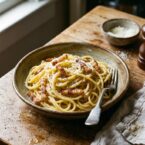
Carbonara

Total Time: 25 minutes

Yield: 4 servings


Description
A rich, silky Roman pasta made with eggs, cured pork, hard cheese, and black pepper — no cream. Authentic carbonara gets its luxurious texture from a carefully tempered egg and cheese mixture that coats hot pasta without scrambling. It is one of the most iconic and frequently botched Italian dishes, but the technique, once learned, is straightforward and reliable.
Ingredients
Units
- 12 ounces (340g) spaghetti or rigatoni
- 6 ounces (170g) guanciale or pancetta, cut into small strips or cubes
- 3 large egg yolks plus 1 whole egg
- 1 cup (about 3 ounces / 85g) finely grated Pecorino Romano
- 1/2 cup (about 1.5 ounces / 45g) finely grated Parmigiano-Reggiano
- 1 1/2 teaspoons freshly cracked black pepper
- Fine sea salt for the pasta water
Instructions
- In a bowl, whisk together the egg yolks, whole egg, grated Pecorino, Parmigiano, and about 1 teaspoon of the black pepper until smooth and creamy. Set this mixture aside — this is your sauce.
- Cook the guanciale or pancetta in a large cold skillet. Place over medium heat and cook slowly, stirring occasionally, for 7-10 minutes until the fat has rendered and the meat is golden and crispy. Do not drain the fat — it is part of the sauce. Remove from heat.
- Meanwhile, cook the pasta in generously salted boiling water until 1 minute short of al dente. Reserve at least 1 1/2 cups of pasta water, then drain.
- Add the hot drained pasta directly to the skillet with the guanciale and its fat. Toss over medium heat for 30 seconds to coat the pasta in the rendered fat.
- Remove the skillet completely from the heat. Wait about 30 seconds for the pan to cool slightly (this is crucial — if the pan is too hot, the eggs will scramble). Then pour the egg and cheese mixture over the pasta.
- Toss vigorously and continuously with tongs, lifting and turning the pasta, for 1-2 minutes. The residual heat will gently cook the eggs into a creamy, custard-like coating. Add warm pasta water a tablespoon at a time if the sauce is too thick or the pasta seems dry.
- Serve immediately, topped with the remaining black pepper and an extra grating of Pecorino. Carbonara does not wait.
Notes
- The pan must be off the heat when you add the egg mixture. On the heat = scrambled eggs. Off the heat with hot pasta = creamy sauce.
- Guanciale (cured pork jowl) is traditional and has the best flavor, but pancetta is a good substitute. Avoid regular bacon, which is too smoky.
- Grate the cheese as finely as possible, ideally on a Microplane. Coarsely grated cheese clumps rather than melting into a smooth sauce.
- Carbonara thickens as it sits — serve immediately and eat quickly. Add a splash of warm pasta water to leftovers when reheating.
Nutrition
- Serving Size: 1 serving
- Calories: 770
- Fat: 46 g
- Carbohydrates: 62 g
- Protein: 27 g
Frequently Asked Questions
Why did my carbonara turn into scrambled eggs?
The pan was too hot when you added the egg mixture. Remove the pan completely from the heat and wait thirty seconds before adding the eggs. The residual warmth is enough to set the eggs into a creamy sauce.
Is carbonara supposed to have cream?
No. Authentic carbonara has no cream. The creamy texture comes from the emulsified eggs, cheese, and starchy pasta water. Cream is an American addition that makes the dish heavier and less traditional.
What is the difference between guanciale and pancetta?
Guanciale is cured pork jowl, which is fattier and more flavorful. Pancetta is cured pork belly, similar to unsmoked bacon. Both work, but guanciale is traditional and worth seeking out if you can find it.
If You Liked This Recipe, You’ll Love These
- A Fun Way to Serve Pasta: Baked in a Tomato
- Bolognese Sauce with Zucchini Noodles
- Arrabbiata Pasta Sauce
- Arrabiata Lasagna with Aged Havarti
The post Carbonara appeared first on Honest Cooking and Travel.

